
A shade net for tomatoes is a heat tool, not a permanent cover. Tomatoes are heavy fruiting plants that need strong light to set and ripen crop. Wrap them in deep shade all year and the yield falls, even though the leaves look healthy. The goal is the lightest cloth that stops heat stress at the hottest part of the day.
This page covers the tomato-specific balance. First, the grade that protects fruit without starving the plant. Second, where the net sits and when it comes off. Then the nursery exception, the mesh to buy, and how to size a roll to your plot. For general seedbed mechanics see our nursery beds guide; the rules here are for fruiting tomatoes.
Why a Shade Net for Tomatoes Must Stay Light
Fruit is expensive to build. A tomato plant spends the sugar its leaves make on flowers and fruit, so it needs full light to keep that supply up. A shade net for tomatoes therefore works at the margin, not over the whole day. In practice, it trims the peak sun that scorches fruit and stalls pollination. Meanwhile, it leaves the morning and late-afternoon light that drives sugar. Remove too much light and the plant grows leaf instead of fruit. That is the trade every grade decision below is trying to win.
Extension work on high-tunnel tomatoes puts a figure on the light side of that trade. A 30% cloth reduced sunscald injury, uneven ripening and cracking, yet in mild summers shade could cut yield by lowering photosynthesis (shade cloth on high tunnel tomatoes). However, a Kenyan open field at midday is harsher than a mild-summer tunnel. So local growers run a heavier cloth than that trial figure. The principle still holds: shade only as deep as the heat demands.
The Best Shade Net for Tomatoes Is 50%
For open-field and net-house tomatoes in Kenya, a 50% shade net is the working standard. It removes about half the incoming sun at peak. That is enough to cool the canopy and shield ripening fruit. It still passes the light a fruiting plant needs. Specifically, 50% sits between the light 30% trial cloth and the heavy nursery grades. It is the compromise a hot, high-light site calls for.
Do not jump to 75% on fruiting plants because a neighbour uses it on seedlings. A shade net for tomatoes at 75% through the fruiting stage starves the crop. As a result, leaves stay dark green and soft, fruit sets slowly, and ripening drags. If your block already runs 50% and fruit still scorches, fix the position and the watering first. Then consider a lighter or heavier cloth, not a deeper one by default. The percentage chooser shows what each grade removes.
| Grade | Where it fits tomatoes | Main risk |
|---|---|---|
| 30% | High tunnels in mild heat, per extension trials | Too light for a harsh open-field midday |
| 50% | Open field and net houses over fruiting plants | Costs yield if left up through the cool season |
| 75% | Nursery beds and hardening, for 3 to 4 weeks | Starves fruiting plants of the light they need |
What a Shade Net for Tomatoes Fixes
Four problems pay for the cloth on a tomato block. Each one is a heat or light symptom, not a disease. A shade net for tomatoes addresses them by cutting the peak load, not by feeding or spraying the plant.
- Blossom drop. Heat above roughly 32°C by day or 22°C by night turns tomato pollen sticky and nonviable, so flowers fall unpollinated. University of Delaware extension records those thresholds (high temperatures and poor fruit set). Cooling the canopy at midday keeps more flowers setting.
- Sunscald on fruit. Direct sun on exposed ripening fruit bleaches a pale, sunken patch. Filtered light prevents it.
- Water loss. A cooler canopy transpires less, so the block holds moisture between irrigations and watering frequency drops.
- Wind damage. A net-house wall breaks the wind that snaps staked plants and rubs fruit.
Notice what is not on that list. Shade does not cure blight, feed the crop, or replace water. It only removes the heat and light extremes. Treat it as one tool in the season, not the whole programme.
75% Belongs in the Nursery, Not on Fruit
The one place a tomato grower wants heavy shade is the seedbed. Young tomato seedlings have little root and no reserve against scorch. For the first 3 to 4 weeks they benefit from a 75% shade net. Then harden them off under lighter shade or full sun before transplanting. That step-down is the same discipline any seedbed follows.
Keep the two stages separate in your buying. A 75% cloth over the nursery and a 50% cloth over the fruiting block is the correct pair. Using one grade for both is the common error. Our nursery beds guide covers the hardening schedule in detail. Once plants are in the field and flowering, the 50% fruit grade takes over.
Open-Field and Net-House Positions
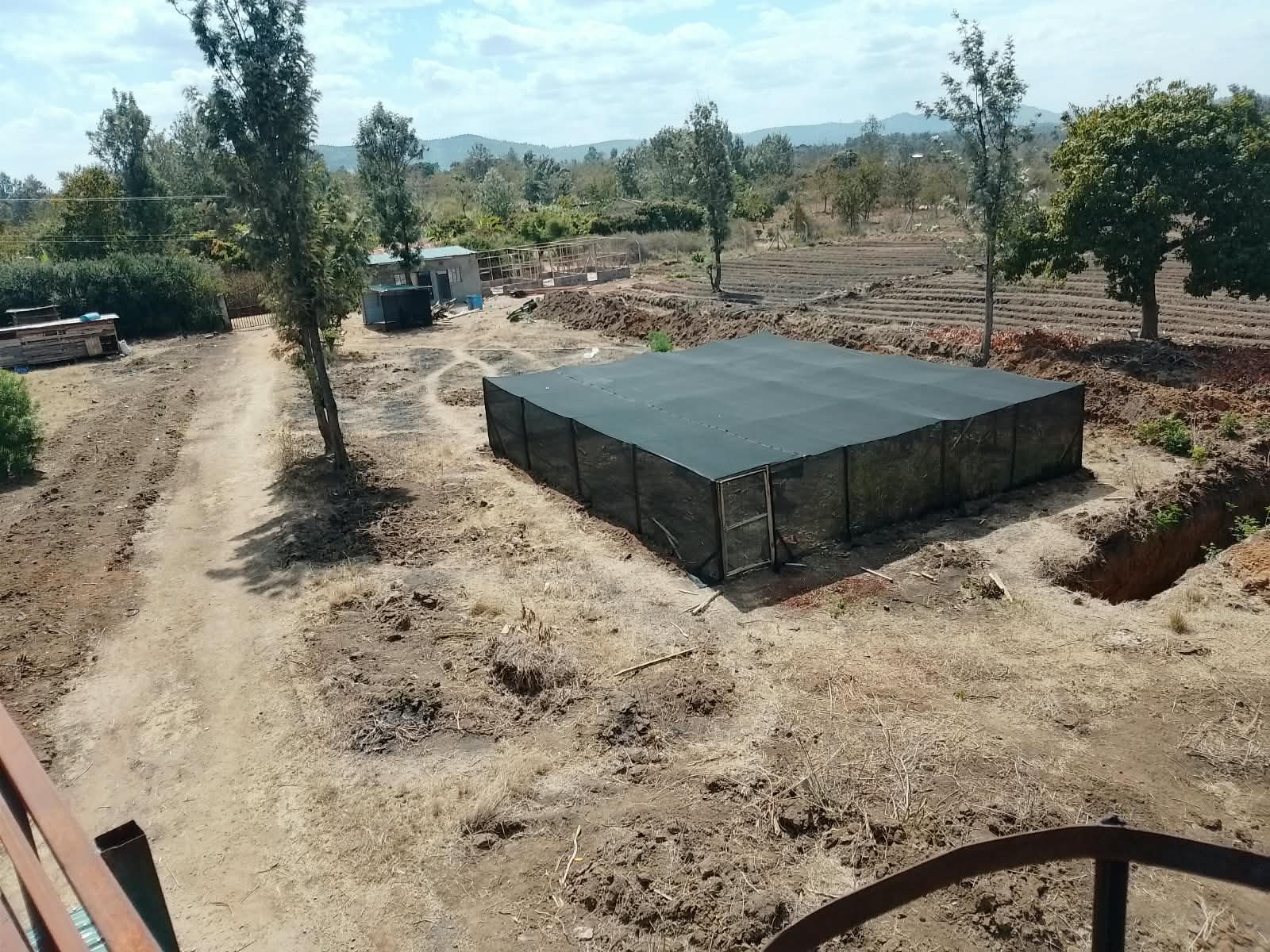
Where the cloth sits changes how much it helps. In a net house the roof is held well above the crop, so hot air escapes through the mesh instead of pooling on the leaves. In contrast, in the open field a low tunnel or a flat panel over the row still cuts peak sun, but it traps more heat at leaf level. Therefore raise the cloth as high as the frame allows. A shade net for tomatoes hung tight against the canopy cooks the very leaves it should protect.
In the photo below, a completed tomato net house carries a dark roof panel, netted sides and a single doorway. Notice the air gap between the roof and the beds: that space is what lets moving air carry heat out of the structure. For shading a film greenhouse, where the cloth sits over or under the plastic, see our greenhouse shading guide. A tomato net house is a lighter build, yet the ventilation principle does not change.
A Shade Net for Tomatoes by Season, Not All Year
Shade is a hot-month tool. In the cool, cloudy season the same cloth that saved fruit in February costs yield in July. University of California extension notes shade cloth can cut ambient temperature by about 10°F (roughly 6°C), and advises removing it once temperatures fall back below the heat threshold (protecting tomatoes in hot weather). So plan to roll the cloth back, or lift it, when the hot months pass.
A shade net for tomatoes left up all year is the slow version of over-shading. The crop looks fine and yields less, and the grower blames the variety. Instead, tie the cloth so a crew can roll it back in an afternoon. In a net house, roll the roof to the ridge; in the open field, lift the panels onto the frame. Keep the cloth for the next hot season rather than discarding it.
Knitted Mesh and UV Rating for a Tomato Block
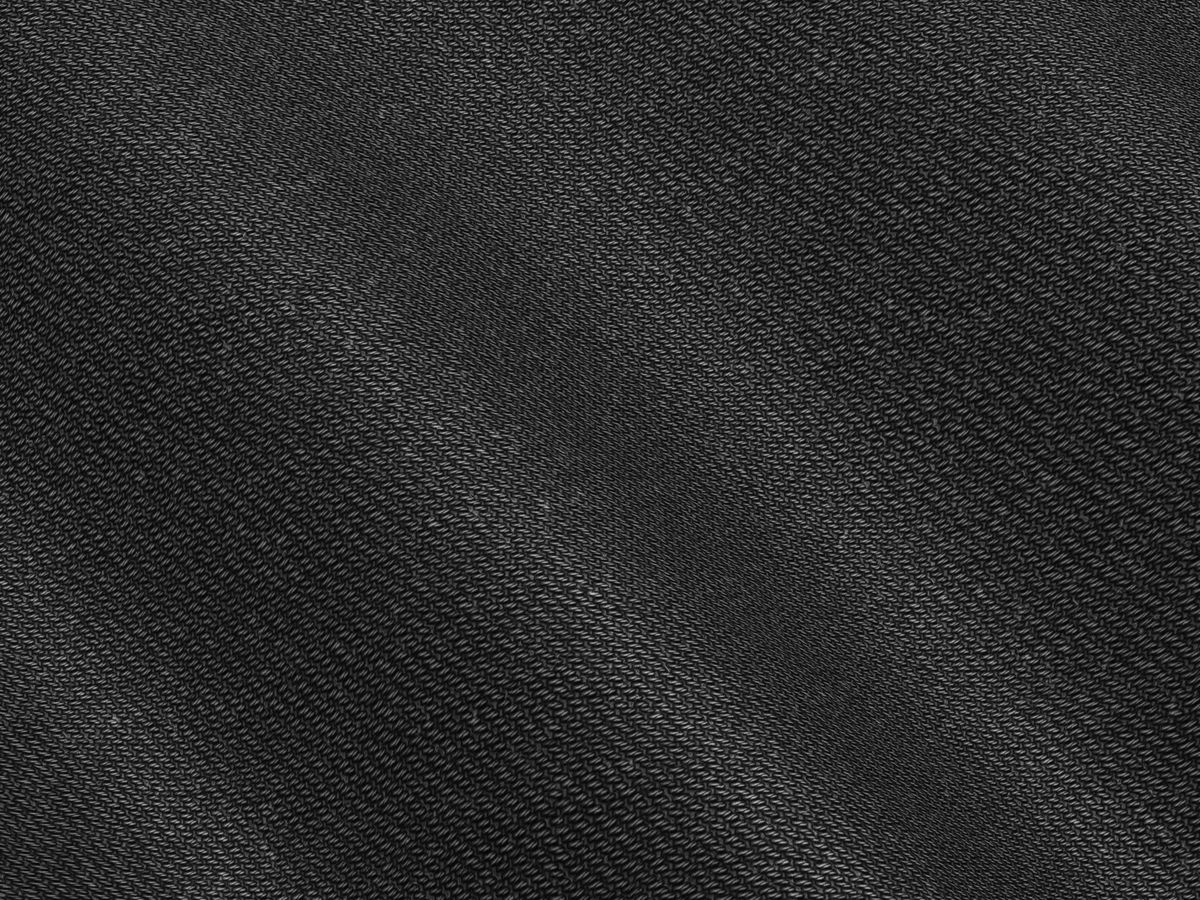
Buy knitted HDPE, not woven. The looped construction does not ladder when a stake or a tie punctures it, so a small tear stays small. The open loops also pass air at high shade ratings, which matters on a crop that must not sit in still, humid heat. Woven cloth is cheaper; however, it traps more heat and runs at a cut edge. For a tomato block the knitted cloth is worth the difference.
First, check the UV stabiliser rating. A cloth rated for 3 to 5 years outdoors survives the roll-back-and-redeploy cycle a seasonal tomato shade goes through. A budget cloth that lasts one season dies before it has earned its price. Our type taxonomy compares knitted with woven and the remaining constructions. In the close-up below, the interlocked loops are visible: they are the reason the cloth resists tearing and still passes air.
Sizing the Net to Your Tomato Plot
Size from the plot, not from the roll. Before ordering, walk the beds with a tape: record each bed’s length and the walking paths between them. For example, a 1 m bed separated by a 0.5 m path can be staked and picked from either side. The cloth needs to span every bed plus an overhang you can anchor at the edges. Enclosing the block as a net house adds side-wall area to the roof, so measure the frame height too.
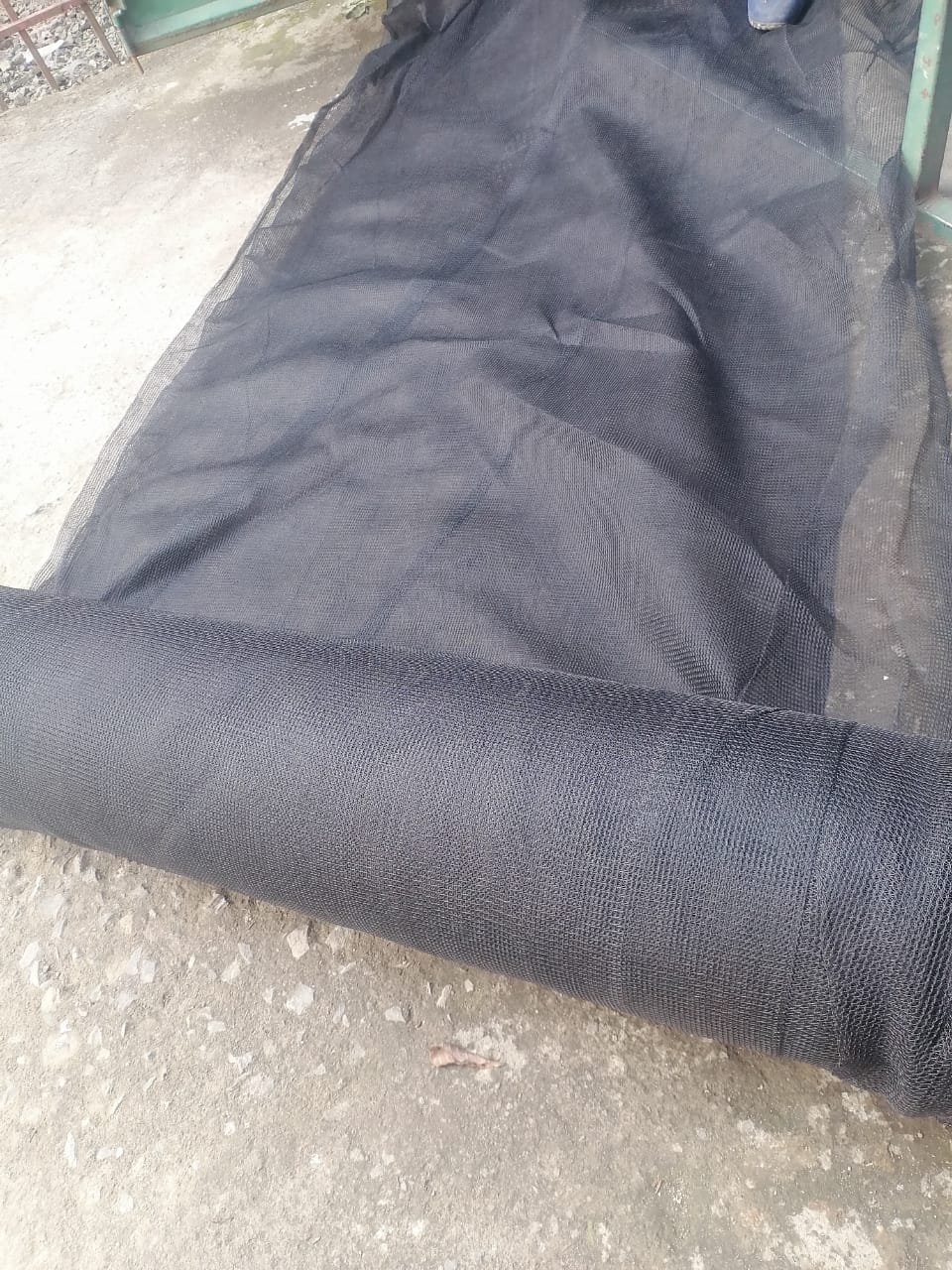
Rolls ship in set widths (2 m and 4 m are the common ones) and in 50 m or 100 m lengths. Therefore plan the bed layout around a width we stock, instead of slicing the cloth into narrow strips. Also allow extra for tie points and for beds you may add next season. One continuous roll costs less than stitching two panels together above a bed. The photo below shows the product you are pricing: a part-opened roll, ready to cut to your layout’s length.
Buying a Shade Net for Tomatoes: Supply and Fitting
We deliver the cloth, the frame hardware and the fitting as a single contract. The net goes on tensioned and at the correct height, so nobody on your team has to rig a loose roll. Next, tell us the plot size and whether the tomatoes grow in the open or inside a net house. We then select grade, width and length against your layout and fit it anywhere in the country. If the frame already stands, we can sell cloth alone and set out the tie points, typically at 0.5 m intervals.
Send the number of beds, each bed’s measurements in metres, and the crop’s current stage. Say whether you need one 50% fruit grade or the 75% nursery plus 50% fruit pair. We price the cloth, the posts and the labour from those figures. Our supplier checks page lists what to confirm before paying any vendor, and the installation service fixes the frame height before the cloth is hung.
Write to info@shadenetsuppliers.co.ke or call +254 728 163329. The Nakuru counter sits on George Morara Road, and the contact page takes written quote requests. Before writing, browse the full shade net range to confirm your sizes are ones we stock, or come to the Nakuru counter in person.
Common Tomato Shading Mistakes
- Running 75% on fruiting plants because it worked on the seedlings, and starving the crop of light.
- Leaving the cloth up all year, so the cool season yields less and the grower blames the variety.
- Tying the net flat against the leaves, which traps hot air at canopy level even under shade.
- Shading a cool, cloudy season when the crop needs every hour of light it can get.
- Choosing woven cloth on a windy plot, then watching a cut edge run across the whole panel.
A shade net for tomatoes only pays when the grade, the position and the season are all right. Typically, most losses come from how the net was set up, not from the cloth itself. For shading other crops and seedbeds, the farm and nursery guide goes beyond the tomato block. Once you are shading whole farms crop by crop, our corporate shade net farming guide covers that wider job.
Frequently Asked Questions
What percentage shade net for tomatoes is best?
50% for open-field and net-house fruiting tomatoes in Kenya. It cuts heat and sunscald without starving the plant of light. Keep 75% for the nursery stage only.
Does shade reduce tomato yield?
Deep or year-round shade does, because fruit needs light. Light shade confined to the hot months protects yield by stopping blossom drop and sunscald. Remove it when the season cools.
When should I put the net on and take it off?
On for the hottest months, off or rolled back when temperatures fall. Shade is a heat tool, not a permanent cover. Plan the roll-back into the frame.
Can I use the same net for seedlings and fruit?
No. Seedlings want 75% for the first weeks; fruiting plants want 50%. Buy the pair, or step the cloth down as plants leave the nursery.
Do you fit the net as well as sell it?
Yes. One quote covers supply and fitting, or cloth alone when your frame already stands. Send the plot measurements and the crop stage and we will size the quote.